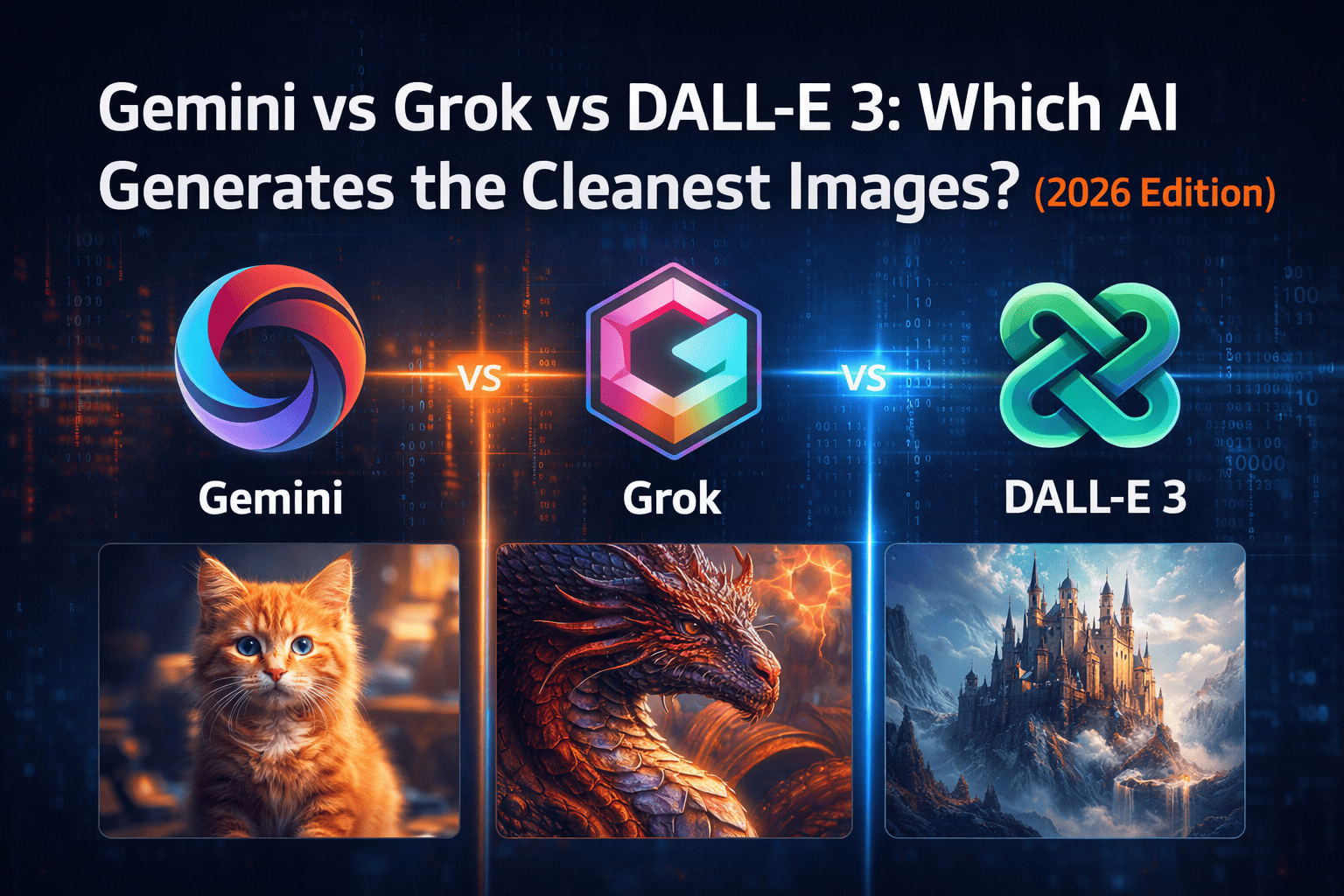
Introduction: The Battle for Visual Supremacy
The landscape of generative artificial intelligence has shifted from “can it create?” to “how perfectly can it create?” In 2026, the trio of Google Gemini, xAI’s Grok, and OpenAI’s DALL-E 3 dominates the market. For creators, designers, and marketers, the most critical question isn’t just about creativity—it’s about the cleanliness of the output.
“Cleanliness” in AI imagery refers to three things: the absence of anatomical glitches (extra fingers), the lack of pixel artifacts, and the subtlety of digital watermarking. In this deep dive, we compare these titans to see which one delivers the most professional, ready-to-use results, and how ReachBrick AI serves as the ultimate companion for all three.
1. Google Gemini: The King of Photorealism
Google’s Gemini model (formerly Imagen/Bard) has made massive strides in photorealism. Its integration with Google Search allows it to understand real-world textures—like the way light hits a brick wall or the transparency of water—better than most.
Image Quality & Texture
Gemini excels in skin tones and natural lighting. If you ask for a “portrait of a woman in sunlight,” the bokeh effect and the skin pores are captured with startling clarity. It rarely produces the “plastic” look that early AI models were known for.
The Watermark Factor
Google is a founding member of the C2PA initiative. Every image generated by Gemini carries a signature digital watermark—a small, semi-transparent star. While it identifies the image as AI-generated, it is placed strategically.
Verdict for ReachBrick Users: Gemini images are clean in terms of resolution, but the “Star” logo is a persistent visual element. Luckily, the Gemini Watermark Remover on ReachBrick is specifically calibrated for this exact icon.
2. Grok-2 (xAI): The Unfiltered Powerhouse
Elon Musk’s Grok has taken a different approach. Hosted on X (Twitter), Grok-2 is known for its “unfiltered” nature. It follows fewer safety guardrails than Gemini or DALL-E 3, allowing for more edgy, creative, and sometimes controversial imagery.
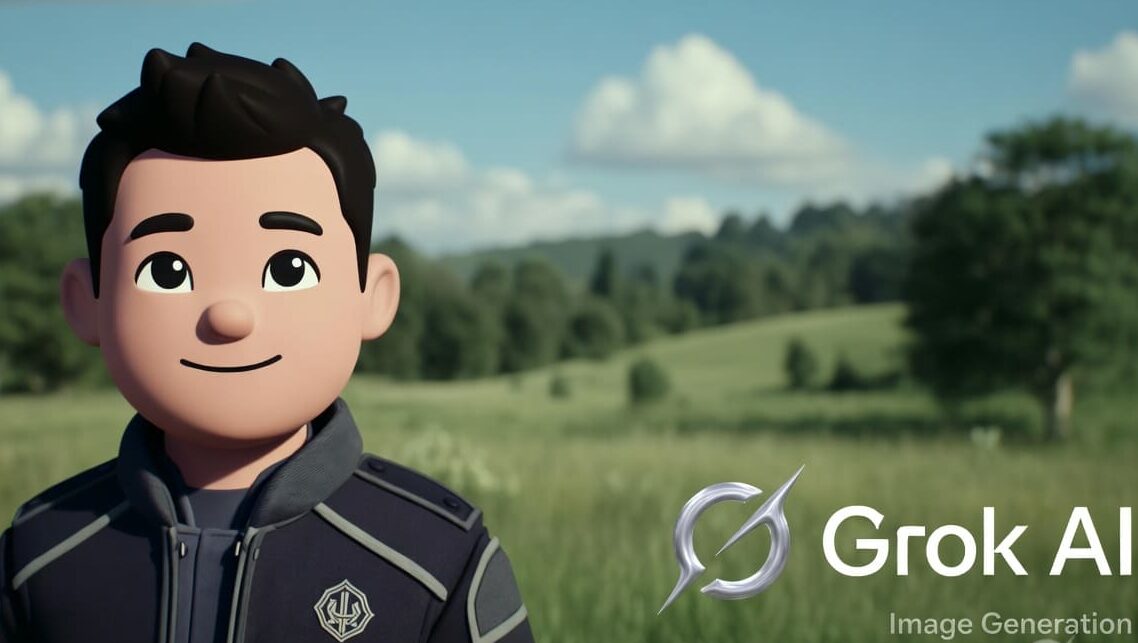
Image Quality & Contrast
Grok images often have a high-contrast, cinematic feel. They look like they were shot on a professional RED camera. However, this high contrast can sometimes lead to “noise” in the darker areas of the image, making them slightly less “clean” than Gemini’s smooth renders.
The Watermark Factor
Grok images generated on X.com often include a distinctive watermark that is harder to ignore than Google’s. It’s designed to be bold.
Verdict for ReachBrick Users: Grok is the best for social media impact, but its watermarks are intrusive. Our Grok Watermark Remover uses high-contrast edge detection to clean these sharp logos without ruining the cinematic lighting.
3. DALL-E 3 (OpenAI): The Semantic Master
DALL-E 3, integrated into ChatGPT, is arguably the “smartest” of the three. It understands complex prompts better than any other model. If you ask for “a cat wearing a tuxedo, holding a glass of milk, reflected in a vintage mirror,” DALL-E 3 gets every detail right.
Image Quality & Sharpness
DALL-E 3 generates images that are incredibly sharp, almost “hyper-real.” While this is great for logos and illustrations, it can sometimes feel slightly artificial compared to Gemini’s soft, natural photography.
The Watermark Factor
OpenAI uses both visible logos and invisible metadata. The visible logo is usually a small, blocky signature in the corner.
Verdict for ReachBrick Users: DALL-E 3 is the go-to for complex ideas, but the watermark can ruin a clean graphic design. The ChatGPT Watermark Remover on ReachBrick is essential for turning these complex renders into professional assets.
Technical Comparison: The “Cleanliness” Scorecard
| Feature | Google Gemini | xAI Grok | OpenAI DALL-E 3 |
| Photorealism | High (Best for skin) | Medium (High Contrast) | Medium (Sharp/Artistic) |
| Prompt Accuracy | High | Medium | Highest |
| Anatomical Accuracy | High | Medium | High |
| Watermark Subtlety | Very Subtle | Bold | Subtle |
| ReachBrick Support | Full (4K Ready) | Full (Edge AI) | Full (Inpainting) |
Why “Clean” Images Need ReachBrick AI
No matter how advanced these models get, the “Big Three” will always add watermarks to comply with international safety standards. This is where ReachBrick AI becomes your most powerful tool.
The Problem with Screenshots and Cropping
Many users try to “clean” an image by cropping out the watermark.
- The Downside: You lose the composition and the aspect ratio. If you crop a 16:9 image, it becomes a weird size that doesn’t fit your website or slide.
- The ReachBrick Solution: We don’t crop. We use Generative Inpainting and Reverse Alpha Blending. We restore the pixels under the watermark, so your image stays at its original size and resolution.
Future Trends: Invisible Watermarking and C2PA
As we move further into 2026, the “battle of the watermarks” is moving underground. Companies are using “steganography”—hiding data within the pixels that the human eye cannot see.
While ReachBrick helps you clean the visual surface of the image for your presentations, we always recommend respecting the metadata if you are using AI art for journalism or news, to maintain digital trust.
Final Conclusion: Who Wins?
- Winner for Natural Photos: Google Gemini. Its output is the cleanest and most realistic for human subjects.
- Winner for Creative Freedom: Grok. If you want a “raw” look, Grok is your best bet.
- Winner for Complex Design: DALL-E 3. It never misses a detail in your prompt.
Regardless of your choice, the final step to a truly professional image is removing the branding. ReachBrick AI provides the brick-solid foundation you need to take these AI-generated “bricks” and build something truly yours.